FUTURE PROJECT — LAUNCH AUTUMN 2026
Two thousand years of Orthodox writing.
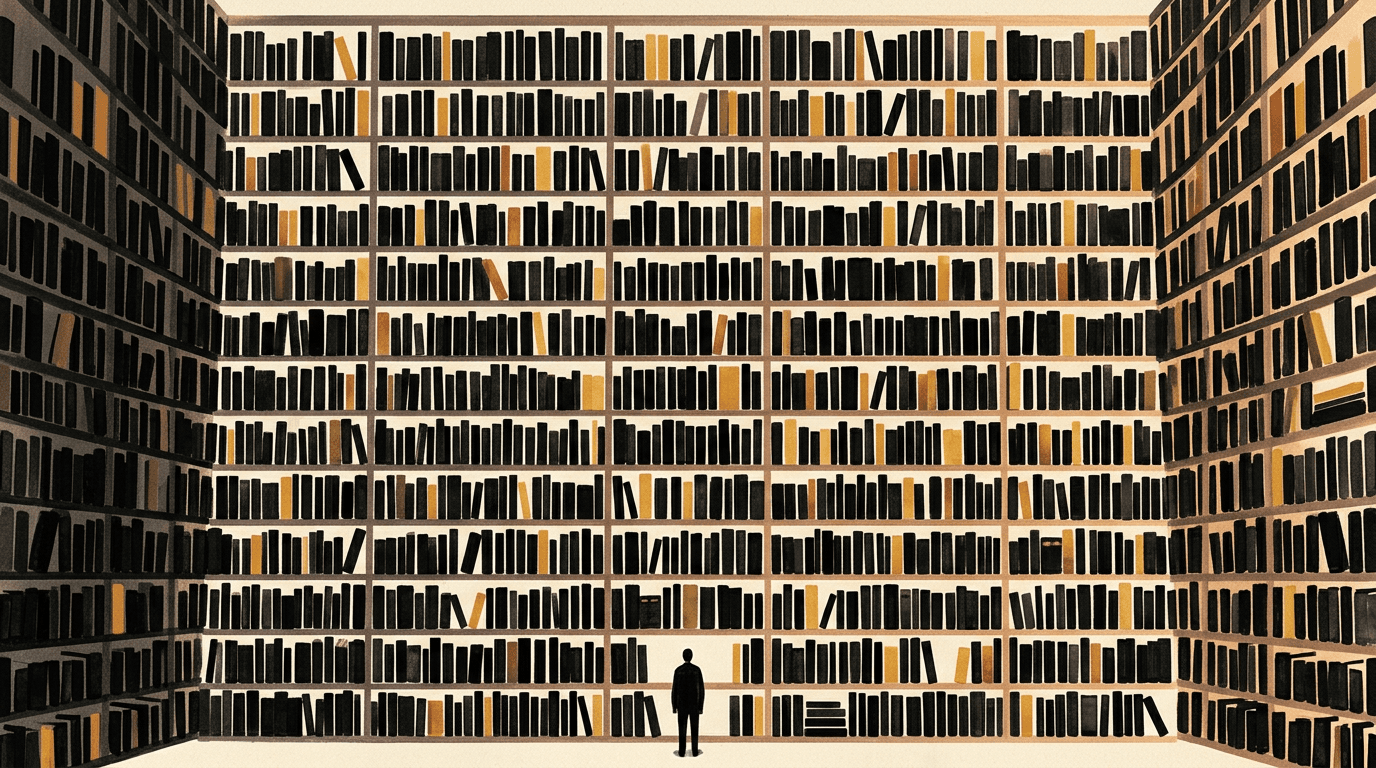
Most of it has never been translated.
We’re changing that.
DOPL is the global infrastructure to translate, preserve, and freely share every patristic text, in every language a reader needs.
FOR TRANSLATORS
A workspace built for theological precision.
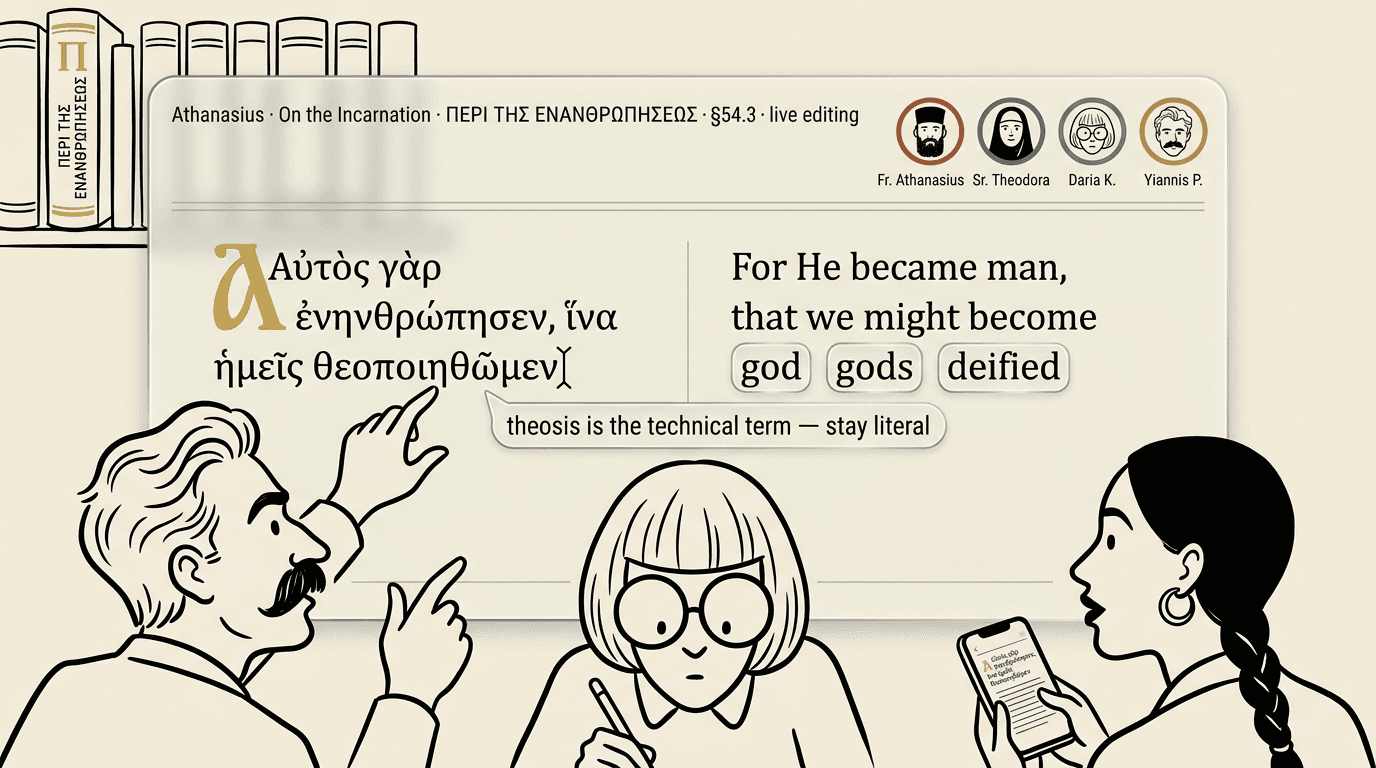
Translating the Fathers is not a job for general-purpose AI. It is a job for trained translators, with AI as a tool that respects what they know.
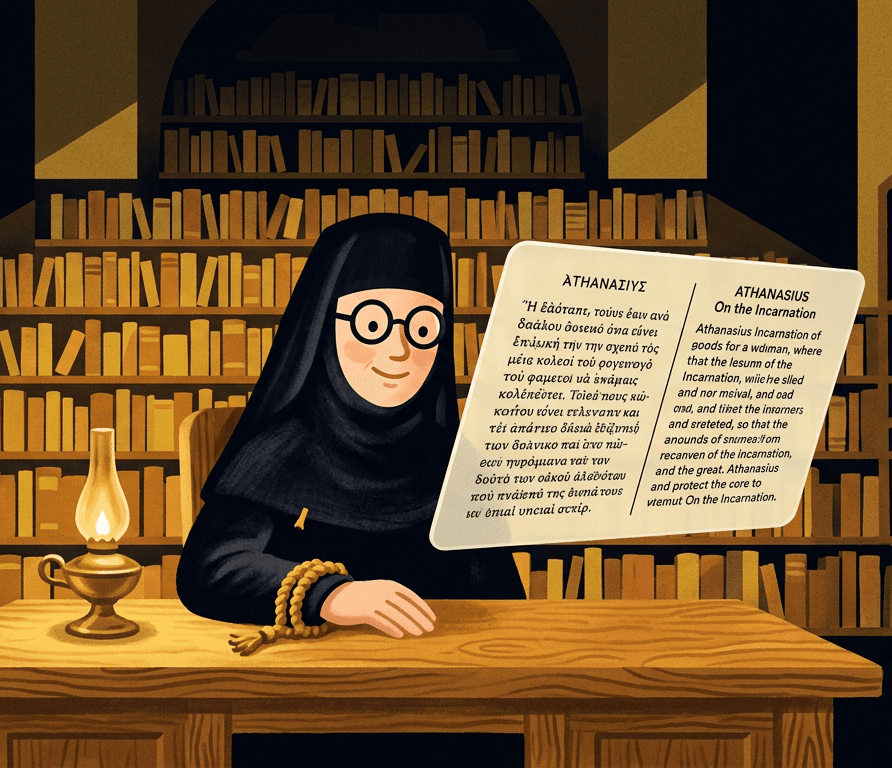
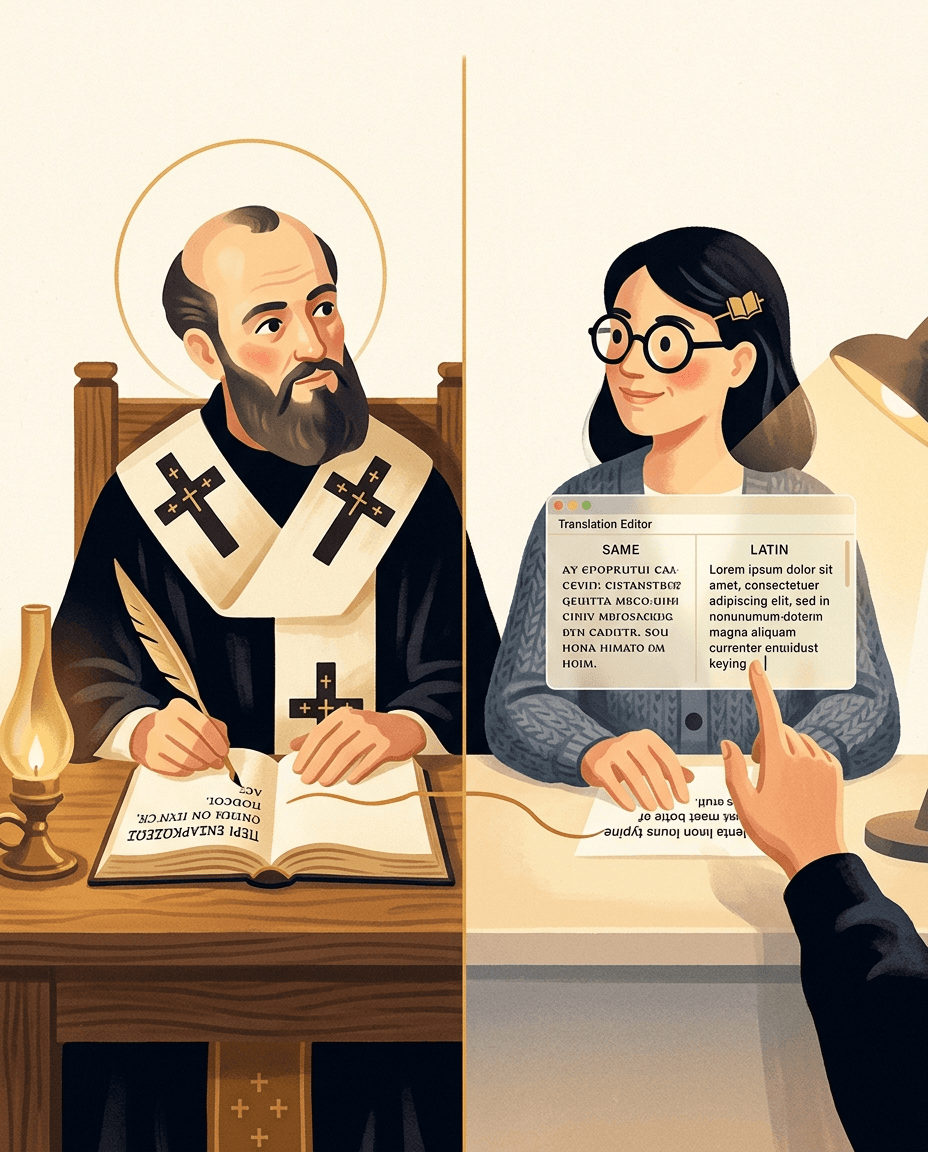
DOPL gives professional translators a workspace where AI handles the mechanical work, first-pass drafts, consistency checks, terminology alignment, source comparison, while the translator owns every theological decision. Teams collaborate. Drafts are reviewed. Every rendering is human-signed.
Translators are paid for their work. Real money. Real careers in Orthodox scholarship.
THE PROMISE
Forever free. In every language a reader needs.
FOR READERS
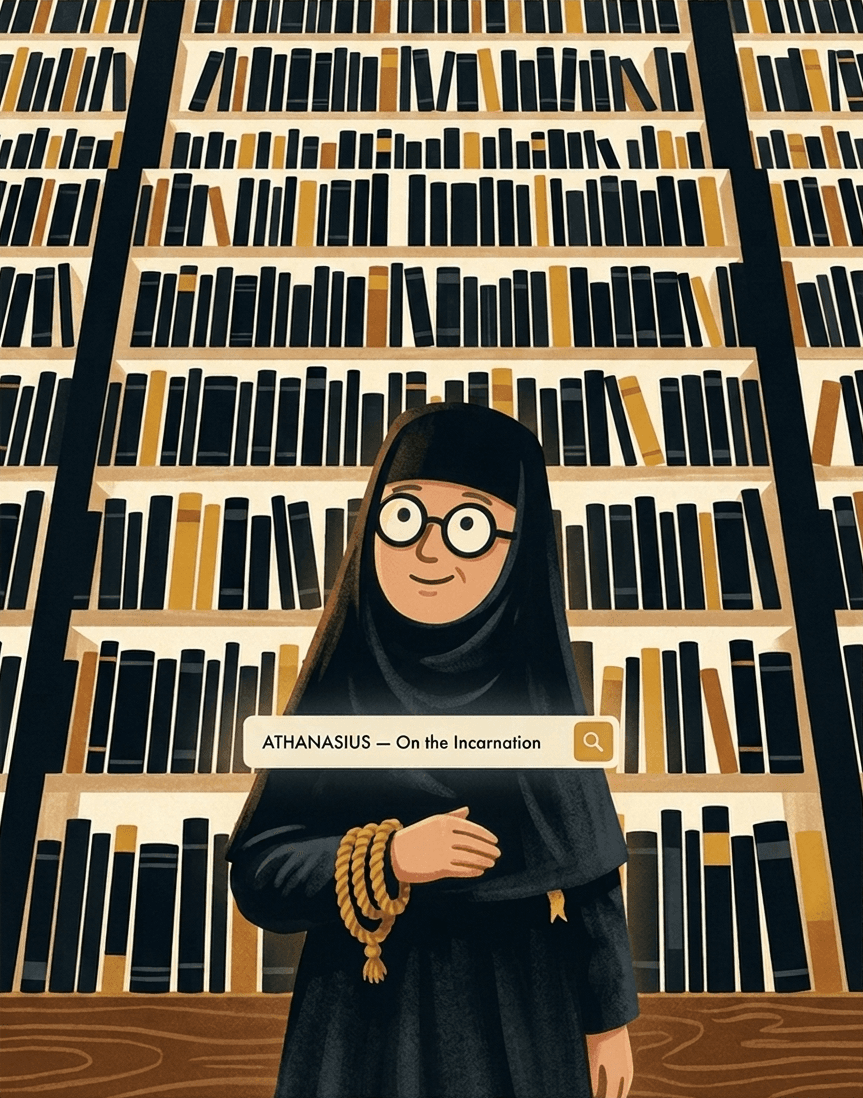
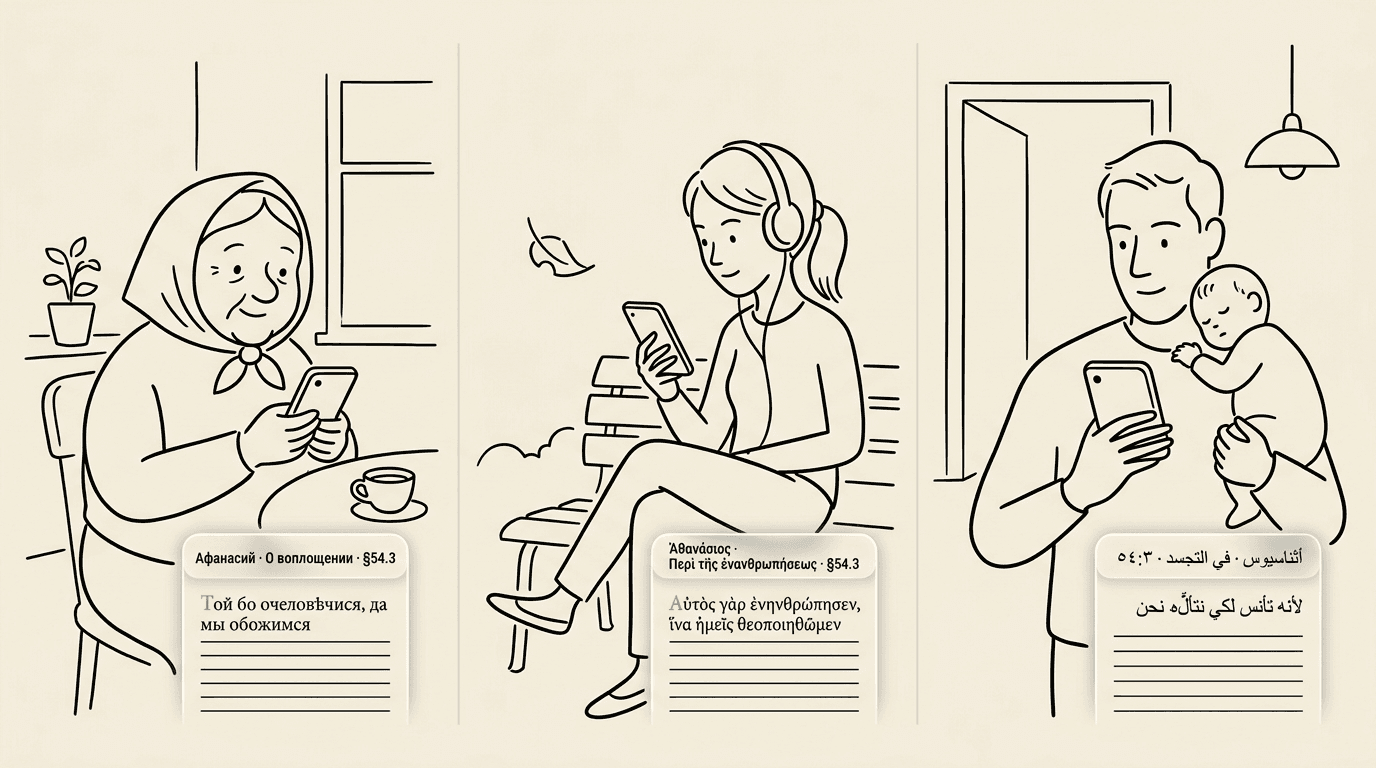
Every text, in your language, always free.
When a translation is finished, it goes online. In every language a reader requests. Without a paywall. Without a sign-up. Without ever expiring.
Churches, monasteries, and publishers can carry these translations into print on their own terms. The digital editions stay open. Forever.
Library state, live
PROCESS
From forgotten manuscript to open access.
 01
01A manuscript is identified.
Monastery archives, university libraries, scattered digital scans. We catalogue what exists, in its original language.
- 02
A translator team forms.
Verified professionals match to projects by language pair, period, and theological specialty.
 03
03AI accelerates, human decides.
Pre-translation, terminology checks, source comparison. Machines handle the mechanical. Translators handle the meaning.
- 04
The text goes online, in every language, free.
With translator attribution, source provenance, and an open invitation for refinement by future scholars.

WHY DOPL
Translating the Fathers is one of the oldest crafts in the Church.
DOPL treats it like one.
Theological precision before speed.
Orthodox terminology and patristic context are the constraints. AI accelerates within them.
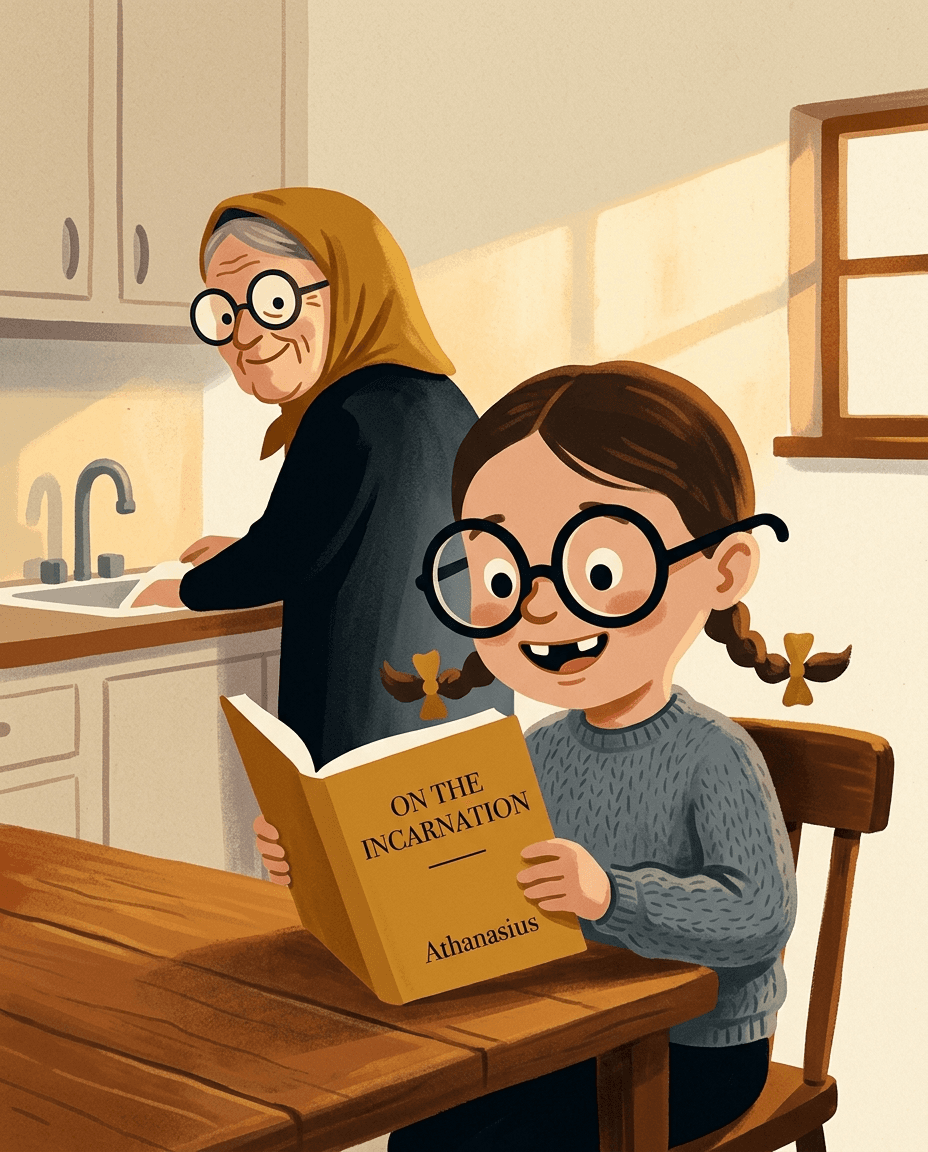
Free access is the moral core.
Reading the Fathers is a birthright of the faithful. DOPL does not sell what belongs to the Church.
Translators paid like the professionals they are.
A real economy for serious work. No volunteer attrition. No precarity-based scholarship.

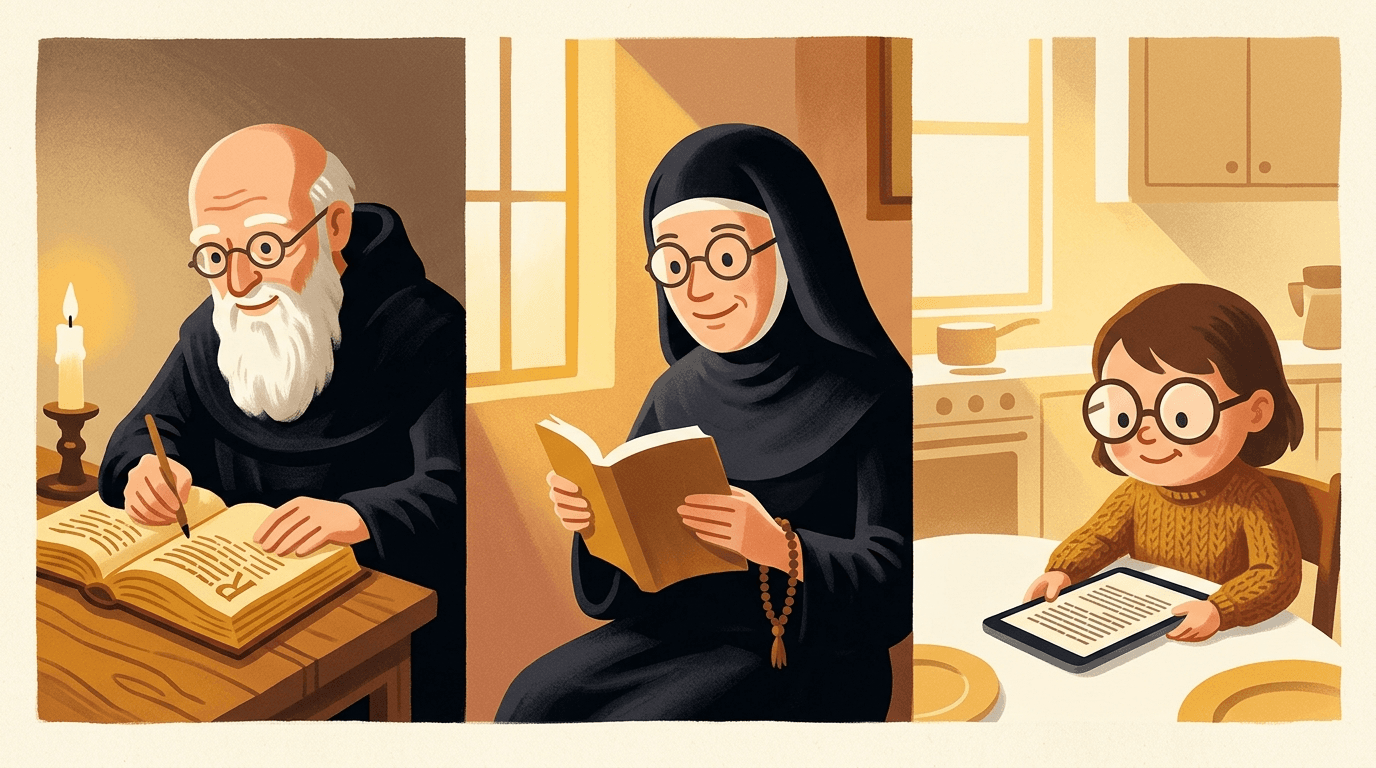
Built for centuries, not for quarters.
Translations are signed, sourced, and preserved as long as the internet exists. And beyond, in partnership with institutions that have outlasted empires.
ROADMAP
A long horizon, made of clear steps.
- Q3 2026Current
Theosis App 2.0
The consumer-facing sub-brand goes live. Orthodox laity get the first taste of what DOPL is building underneath.
- Autumn 2026Upcoming
DOPL launches publicly.
Mission, governance, founding translators announced. Recruitment opens.
- 2027Future
First open library + first paid translations.
Reader Layer goes live with the initial corpus. Translator marketplace opens for vetted contributors.
- 2028Future
Translation Workshop public.
AI-assisted tooling opens to professional translators outside the closed beta.
- 2030+Future
Deep coverage across living languages.
Major liturgical and modern languages reach meaningful depth. The long horizon begins.

Begin
Be part of bringing them back.
Translators. Readers. Sponsors. The project depends on a community that believes the Fathers still have something to say.